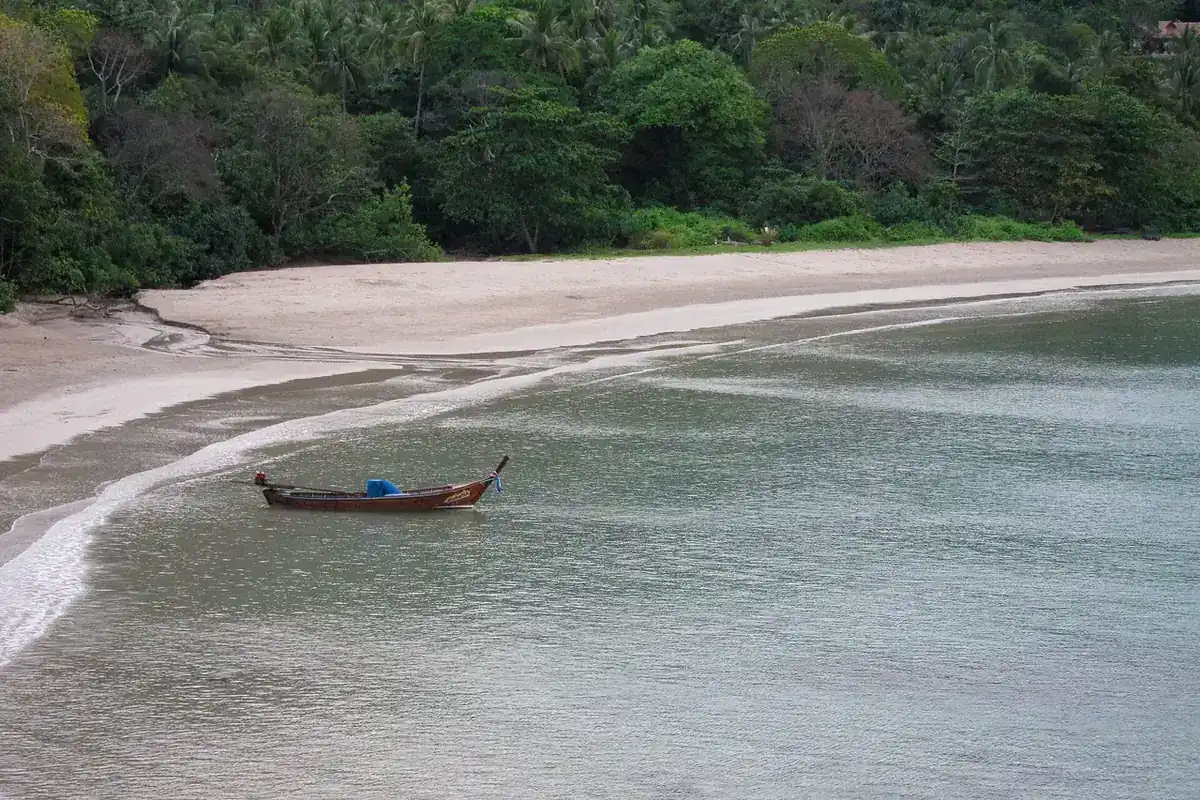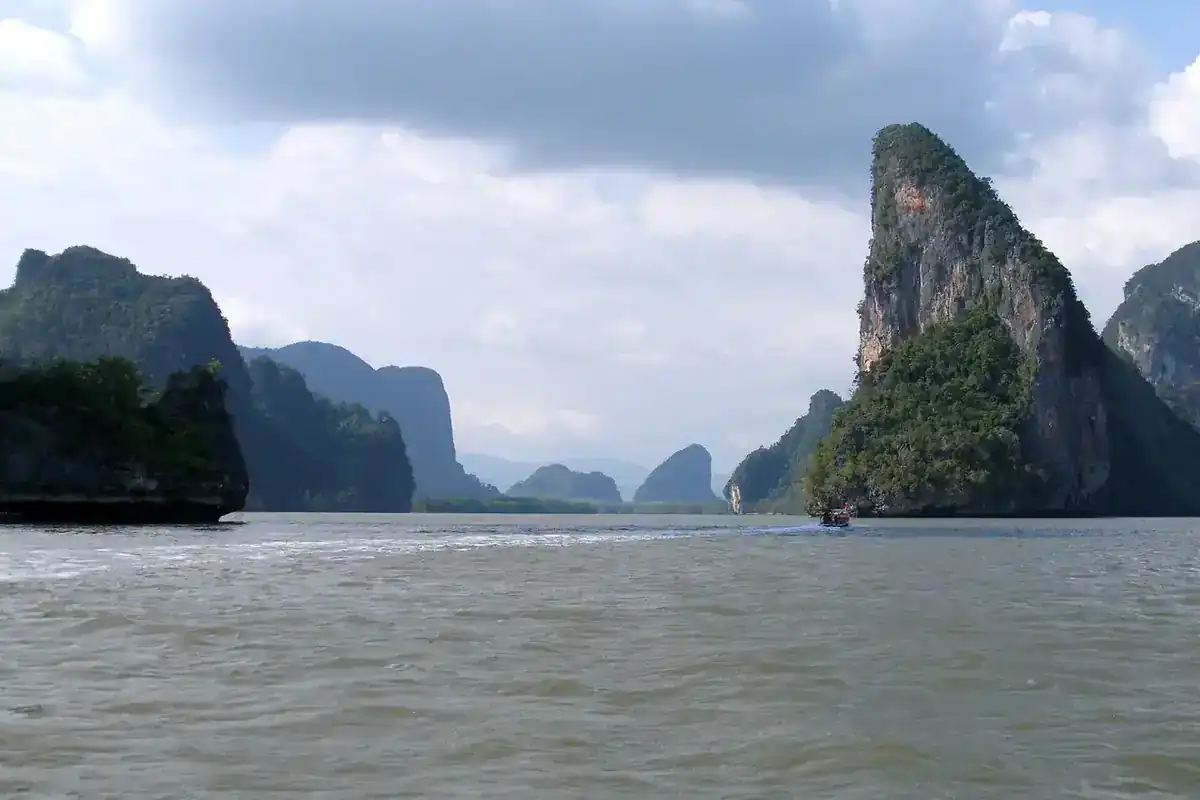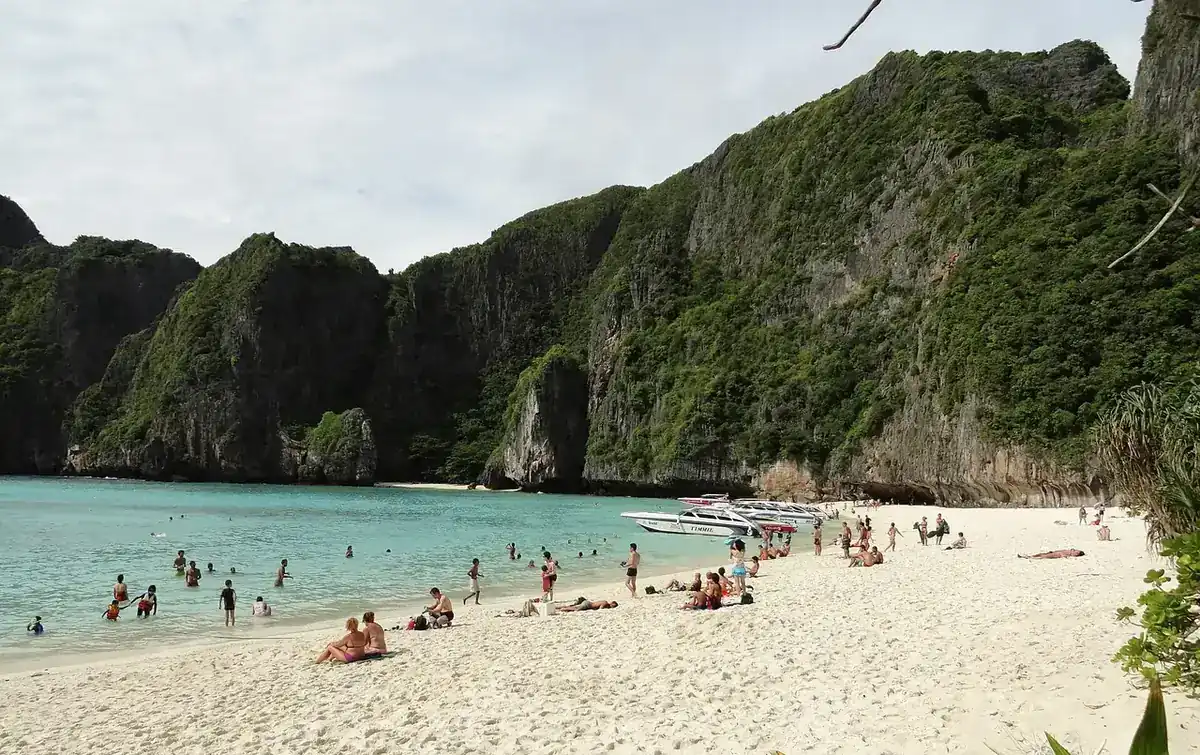
Thailand is a long, narrow country with several very different travel regions: a capital of 10 million people, a mountainous north, a flat central plain full of ruins, a rural northeast, and two island coasts that run on opposite weather calendars. That last point is the single most important planning fact. A trip that is perfect in Phuket in February can be washed out in the same place in September, while the Gulf side might be fine. This hub explains how the country fits together and points you to the detailed guide for each place.
How Thailand is organised
| Region | Main hubs | Character | Typical stay |
|---|---|---|---|
| Bangkok and surroundings | Bangkok, Ayutthaya, Kanchanaburi | Temples, food, markets, day trips | 3-5 nights |
| North | Chiang Mai, Chiang Rai, Pai | Mountains, old city temples, craft culture, cooler air | 4-7 nights |
| Central plains | Sukhothai, Ayutthaya | Ancient capitals and historical parks | 1-2 nights each |
| Northeast (Isaan) | Khorat, Udon Thani, Ubon | Khmer ruins, regional food, few foreign tourists | 3-5 nights |
| Andaman coast (west) | Phuket, Krabi, Khao Lak, Koh Lanta, Koh Phi Phi, Koh Lipe | Limestone cliffs, beaches, diving, boat trips | 5-10 nights |
| Gulf coast (east of the south) | Koh Samui, Koh Phangan, Koh Tao | Palm beaches, diving courses, party and wellness scenes | 5-10 nights |
| Eastern seaboard | Pattaya, Koh Chang | Easy reach from Bangkok, resort strips | 2-4 nights |
| Upper Gulf near Bangkok | Hua Hin | Beach town with royal heritage, short trips | 2-3 nights |
Destination guides
Every destination hub on AsiaRoamer is listed below. Start with the region that matches your time and season.
Bangkok and day trips
- Bangkok: temples, river life, street food, transport and where to base yourself.
- Ayutthaya: the former capital, an easy day trip.
- Kanchanaburi: River Kwai, the Death Railway and Erawan waterfalls.
North
- Chiang Mai: old city temples, cooking classes and mountain scenery.
- Chiang Rai: the White Temple and the far north.
- Pai: a small mountain town reached by a famously winding road.
Central and northeast
- Sukhothai: the historical park of Thailand's first kingdom.
- Isaan: the northeast, with Khmer temples and distinctive cooking.
Andaman coast
- Phuket: the biggest island, with a wide range of beaches and budgets.
- Krabi: cliffs, Railay and island-hopping.
- Koh Phi Phi: small, scenic and busy, reached only by boat.
- Koh Lanta: a long, relaxed island with quiet beaches.
- Koh Lipe: the far southern island near the Malaysian border.
- Khao Lak: calm beaches and the gateway to the Similan Islands.
Gulf islands
- Koh Samui: the largest Gulf island, with an airport and many resort types.
- Koh Phangan: quiet bays and the Full Moon Party.
- Koh Tao: the main place to learn to dive in Thailand.
Eastern seaboard and Hua Hin
- Pattaya: the closest resort city to Bangkok.
- Koh Chang: a forested island near the Cambodian border.
- Hua Hin: a relaxed coastal town south-west of Bangkok.
When to go
Thailand has three broad seasons, but they do not hit every region at once. As a rule of thumb, as of 2026:
- Cool and dry, roughly November to February. The most comfortable time across most of the country and the busiest, with the highest prices around Christmas and New Year.
- Hot, roughly March to May. Very hot in Bangkok and the north. The north can also suffer smoky air from crop burning, typically in the dry months before the rains.
- Rainy, roughly June to October. Showers are often short and heavy rather than all day, and many places are green and quiet. The Andaman coast gets rougher seas, so some boat trips are cancelled.
The detailed region-by-region calendar is in Thailand best time to visit by region. Forecasts and warnings come from the Thai Meteorological Department.
If you only have one choice of month, January and February are the safest for a mixed trip of Bangkok, the north and either coast.
Planning basics
Entry
Everyone arriving needs to complete the Thailand Digital Arrival Card before landing, and visa-free stay rules changed in 2026. Read Thailand entry requirements and the TDAC before booking flights, and confirm with an official source.
Getting there and around
Most international flights land at Bangkok (BKK and DMK), with direct international services also to Phuket, Chiang Mai, Krabi and Koh Samui. Domestic flights, trains, buses and ferries link the regions. See getting around Thailand and airport to city in Bangkok.
Phone and money
A local SIM or eSIM is cheap and useful for maps and ride-hailing; compare options in Thailand eSIM vs SIM. ATMs are everywhere, but carry cash for markets, small restaurants, islands and songthaews.
Health and safety
Thailand is generally straightforward for visitors, with the usual cautions about traffic, scams, sun and sea conditions. The essentials are in Thailand safety, scams and health.
Culture
Temples and the monarchy are treated with real respect. A short read on temple etiquette avoids most mistakes.
Daily budget at a glance
Costs vary by region, with islands and Bangkok rooftops at the top end. These are approximate daily ranges per person, excluding international flights, as of 2026. Prices change, so check the current price on the operator's own page.
| Style | Accommodation | Food and drink | Local transport and activities | Daily total (approx.) |
|---|---|---|---|---|
| Backpacker | Dorm or basic fan room THB 300-700 | THB 250-450 | THB 200-400 | THB 1,000-1,500 |
| Mid-range | Private air-conditioned hotel THB 1,200-2,500 | THB 600-1,000 | THB 500-1,000 | THB 2,500-4,500 |
| Comfort | Upscale hotel or resort THB 3,500-8,000+ | THB 1,200-2,500 | THB 1,000-2,500 | THB 6,000-12,000+ |
A two-week mid-range trip with a couple of domestic flights commonly lands in the range of THB 45,000-75,000 per person excluding international flights (approx., as of 2026). The full breakdown is in Thailand budget per day.
Sample routes
If you have two weeks, Thailand 2-week itinerary offers two routes: one pairing the north with the Andaman coast, and one pairing the north with the Gulf islands. If your main question is which beach to choose, use which Thai island.
FAQ
How many days do I need in Thailand?
Ten days is enough for Bangkok, one northern or central destination and one beach area without constant moving. Two weeks lets you add a second beach region or a quieter stop such as Sukhothai or Koh Lanta. Allow at least three full nights in each place to avoid spending the trip in transit.
Is Thailand expensive?
By international standards it remains good value, particularly for food, local transport and mid-range hotels. Island accommodation in high season, ferries and dive or boat tours cost more than city equivalents. See the budget table above and the detailed guide for ranges.
Do I need a visa for Thailand?
It depends on your nationality, and visa-exemption rules were revised in 2026. Check the official sources linked in the entry-requirements guide for your passport before you book.
What language is spoken?
Thai is the national language. English is widely understood in tourist areas, hotels and larger restaurants, while outside them translation apps and simple gestures help. Learning a few Thai phrases is appreciated.
Which region is best for first-timers?
A common first-timer structure is Bangkok, then the north (Chiang Mai), then one island group chosen by season. Use the best-time guide to pick Andaman or Gulf, then the island decision guide to choose a specific island.
Official sources and further reading
Prices, schedules and entry rules change. Figures here are approximate as of 2026; always confirm on the official or operator page before you book. Spotted something out of date? Tell us.