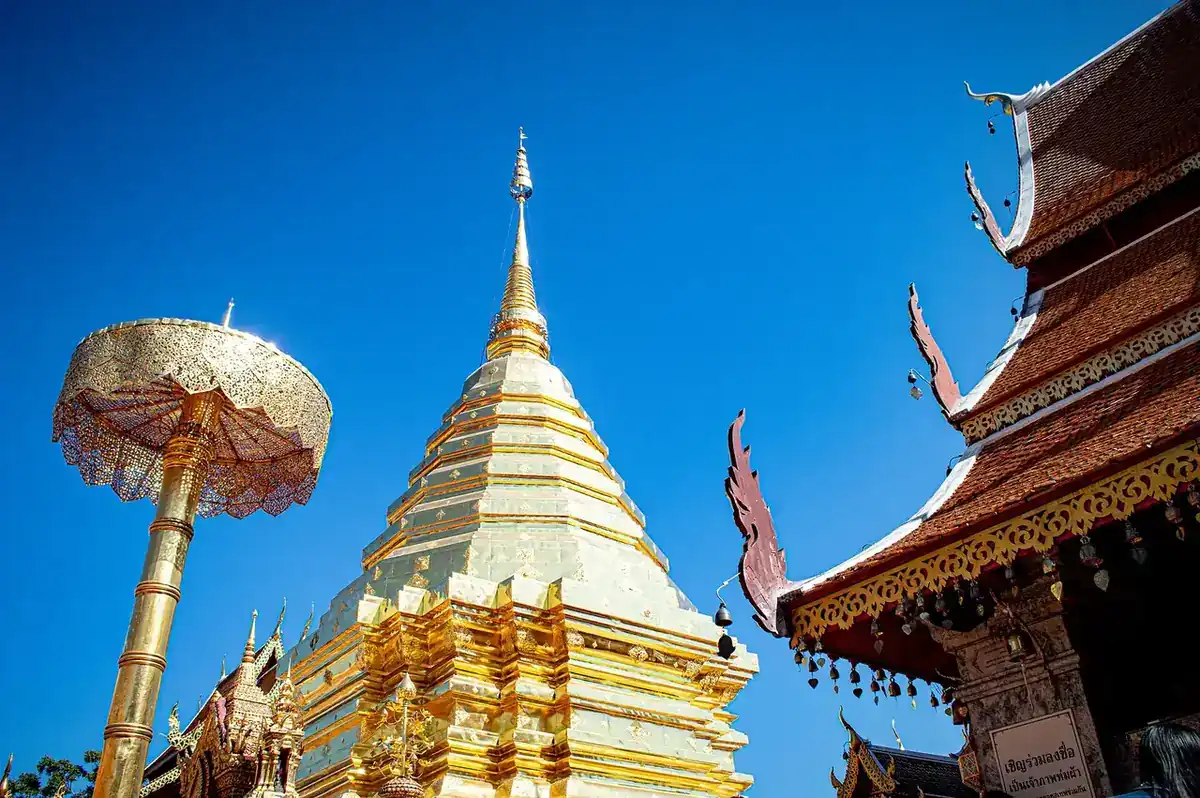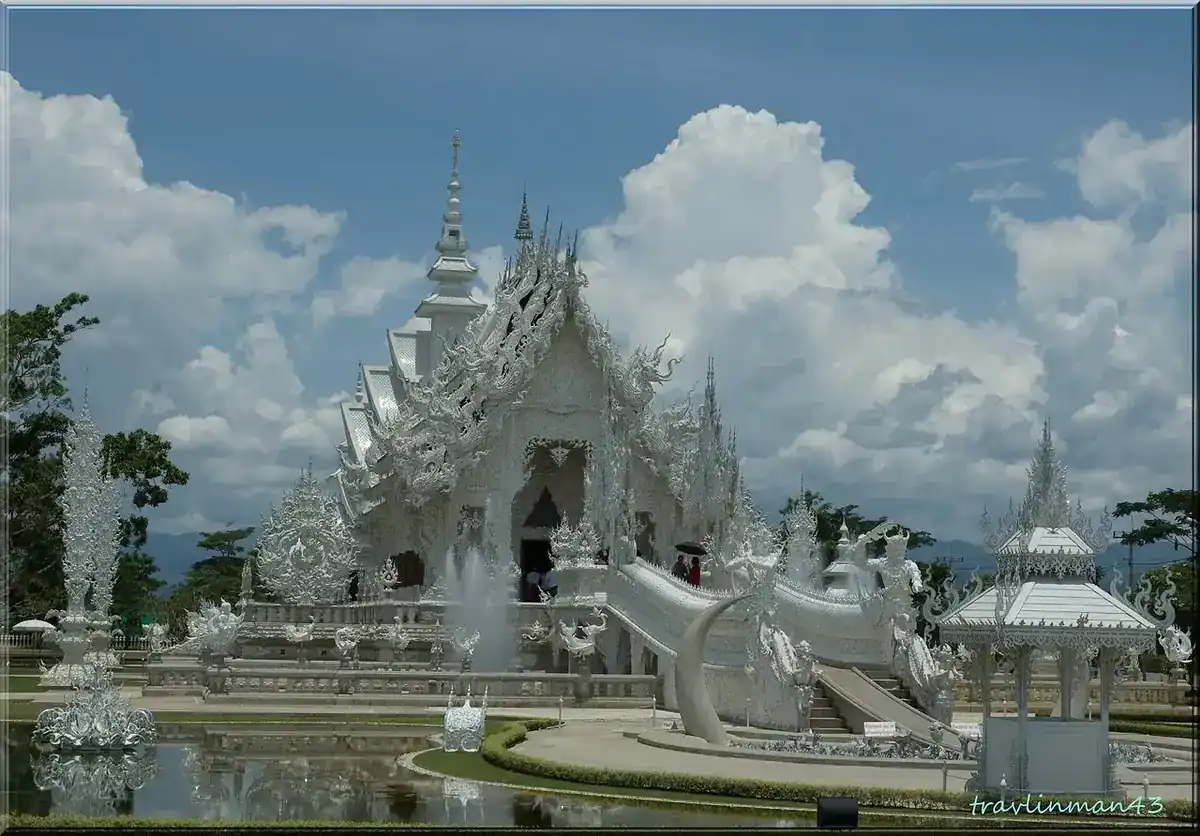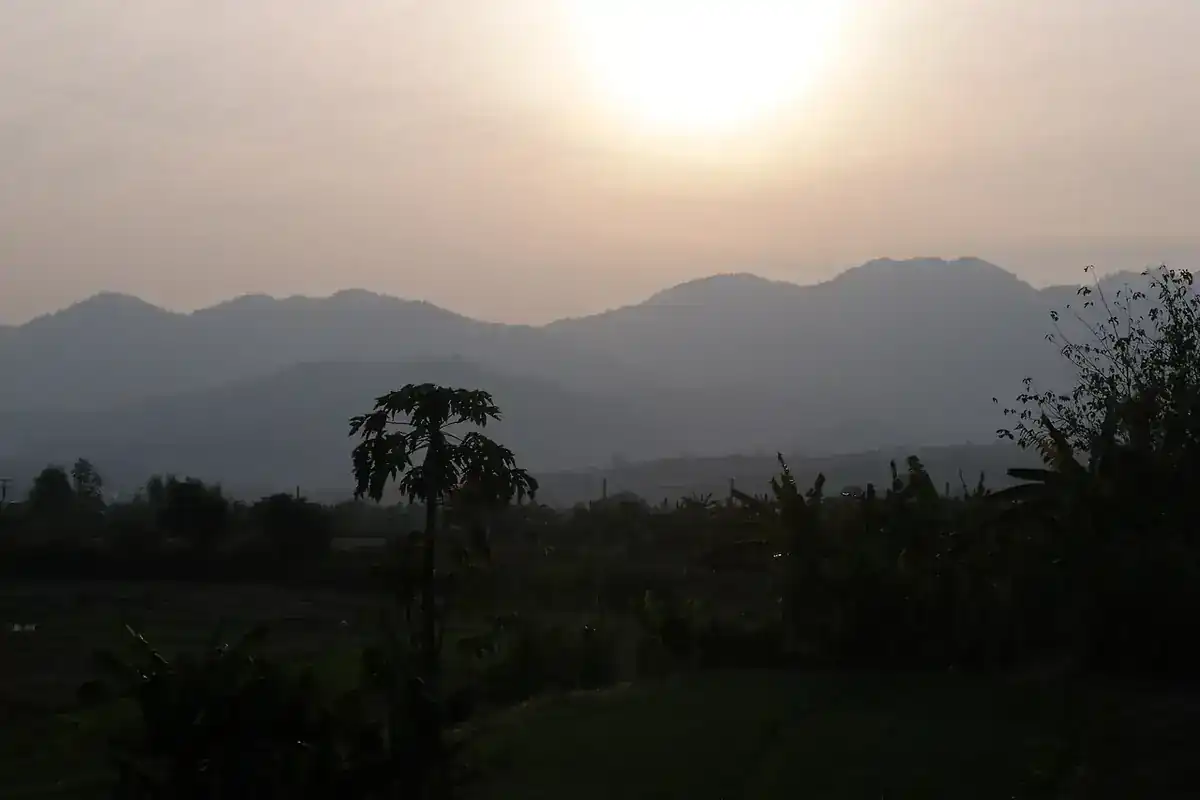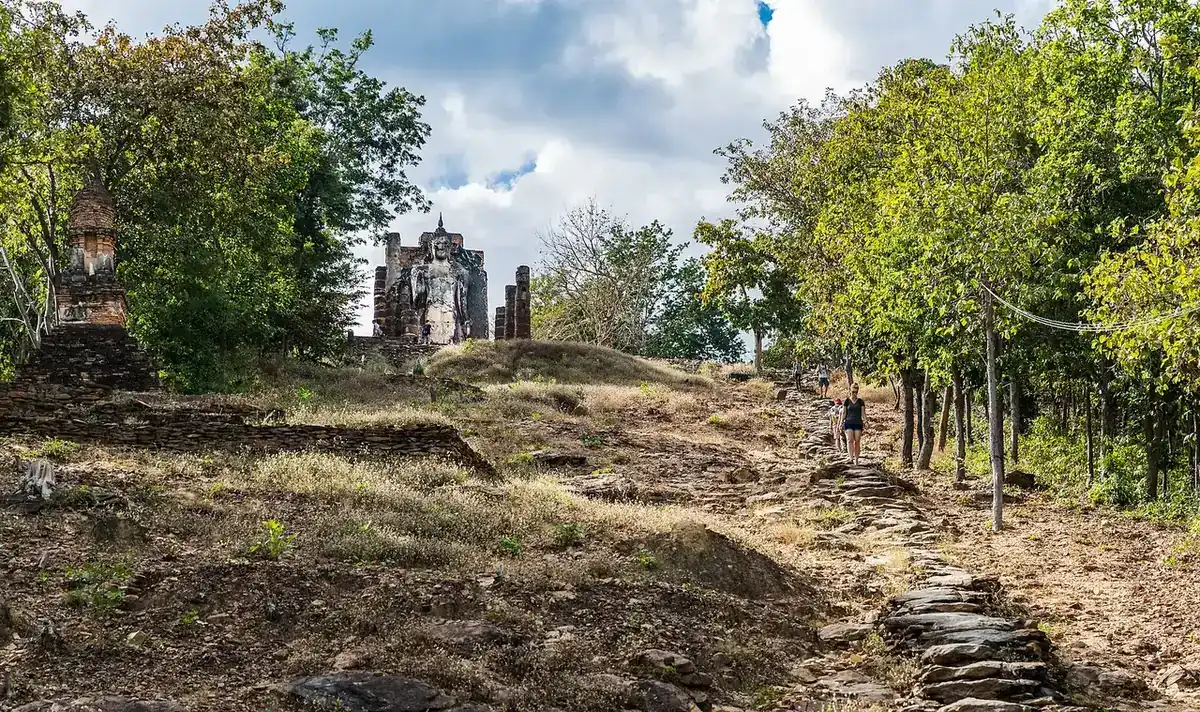
Sukhothai is widely described as the first capital of a unified Thai kingdom, flourishing in the 13th and 14th centuries. Its historical park is quieter and greener than many better-known ruins, with Buddha images, lotus-filled moats and graceful stupas set across open lawns. Together with the nearby Si Satchanalai and Kamphaeng Phet, it forms a UNESCO World Heritage listing. It is a good stop on a route between Bangkok and Chiang Mai.
For a detailed visit plan, see the Sukhothai Historical Park guide.
Getting there from Bangkok
Schedules, operators and fares change, so confirm with each operator on the day (as of 2026).
- Bus: Long-distance buses from Bangkok's northern terminal to Sukhothai typically take 6-7 hours; there are various classes of coach. This is usually the simplest direct option.
- Train: Trains run from Bangkok to Phitsanulok, about 1 hour by road from New Sukhothai, with a connecting bus or van. See the State Railway of Thailand for timetables and overnight options.
- Flight: Check whether direct flights to Sukhothai operate in the current season; otherwise fly to Phitsanulok or Phrae and continue by road. Verify on airline sites.
- Car: About 6-7 hours via Highway 1 and Highway 32 or similar routes; fill up fuel in advance on quieter stretches.
New Sukhothai town, where most accommodation and bus stops are located, lies about 12 km from the historical park. Songthaews run between the two.
Best time to visit
November to February offers the most comfortable temperatures for walking and cycling, with cool mornings. March to May is very hot, so schedule sightseeing for early morning and late afternoon. The wet season (roughly June to October) means green landscapes and fewer crowds, but also showers. The Loy Krathong and Candle festival in November (dates vary with the lunar calendar) features lantern displays and performances in the park, and accommodation is limited then, so book early. See Thailand best time by region.
Where to stay
- Old city (near the park): Guesthouses and boutique hotels within cycling distance of the ruins; peaceful and best for sunrise or sunset visits.
- New Sukhothai: More restaurants, markets and bus connections, with budget to mid-range hotels, but a songthaew ride away from the park.
- Phitsanulok: A larger city with train and air links and more hotel choice, sometimes used as a base for Sukhothai and Si Satchanalai.
Top things to do
- Sukhothai Historical Park (central zone): Wat Mahathat, Wat Sa Si, Wat Si Sawai and Wat Traphang Ngoen are among the main sights. Fees and zone boundaries are set by the Fine Arts Department (as of 2026; check the current price at the gate).
- Outer zones: Wat Si Chum has a large seated Buddha inside a tall walled chamber; Wat Saphan Hin sits on a hilltop; Wat Chang Lom has elephant buttresses.
- Ramkhamhaeng National Museum: Context on the kingdom's art and history.
- Si Satchanalai Historical Park: Roughly an hour north, quieter than Sukhothai and often combined by car or tour.
- Cycling: Bicycles can be hired near the park entrances; the central zone is flat and easy.
- Local food: Try Sukhothai-style noodles in New Sukhothai or at night markets.
Dress modestly in active temple areas, and do not climb on ruins or pose disrespectfully with Buddha images.
Sample budget
| Item | Approx. cost (THB) |
|---|---|
| Bus from Bangkok, one way | 300-700 |
| Bicycle hire per day | 30-100 |
| Songthaew New Sukhothai to park | 30-60 per person |
| Park entry, central zone (foreigners) | Check the current price at the gate; commonly under THB 200 |
| Meal in a local restaurant | 60-250 |
| Guesthouse per night | 500-1,500 |
| Mid-range hotel per night | 1,500-3,500 |
Approximate, as of 2026; check current prices on each operator's own page.
Visit the main central zone early or late. The soft light is better for photography, and the heat in the middle of the day is draining.
During peak festival nights, book accommodation and onward transport well in advance; prices rise and options sell out.
Much of the park is open-air, with little shade. Carry water, sun protection and a hat.
Neighbouring destinations
- Bangkok: The usual starting point.
- Ayutthaya: Another UNESCO site on the way north.
- Chiang Mai: The main northern city, several hours further by road.
- Thailand overview: Planning across regions, including getting around.
Safety basics
Emergency numbers are 191 (police), 1669 (medical emergency) and 1155 (Tourist Police). Watch for heat exhaustion, use helmets if riding scooters, and take care with traffic on rural roads. Keep insurance that covers medical care.
FAQ
How many days do I need in Sukhothai?
One full day covers the central zone and one outer zone; two days allows Si Satchanalai or a slower pace with cycling.
Is it better to stay in the old city or New Sukhothai?
The old city is quieter and closer to the ruins, while New Sukhothai has more restaurants and transport. Choose based on whether you prefer atmosphere or convenience.
How do I get from Bangkok to Sukhothai?
Most travellers take a direct bus, or a train to Phitsanulok followed by a road transfer. Check flights, buses and trains for current schedules.
Can I visit Sukhothai in the rainy season?
Yes. Expect showers and humid conditions, but also green scenery and thinner crowds.
Is Sukhothai suitable for cycling?
Yes. The central zone is flat and compact. Outer zones are farther apart, so a bicycle or scooter helps.
Official sources and further reading
Prices, schedules and entry rules change. Figures here are approximate as of 2026; always confirm on the official or operator page before you book. Spotted something out of date? Tell us.