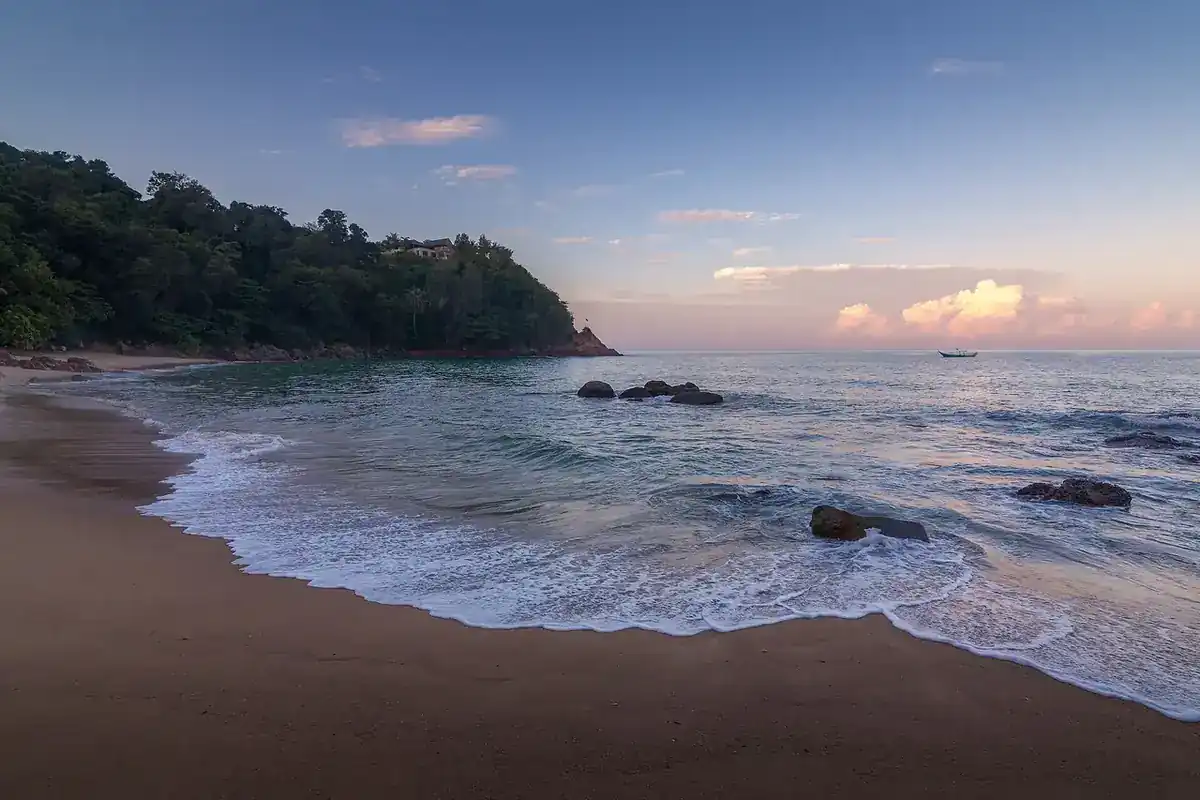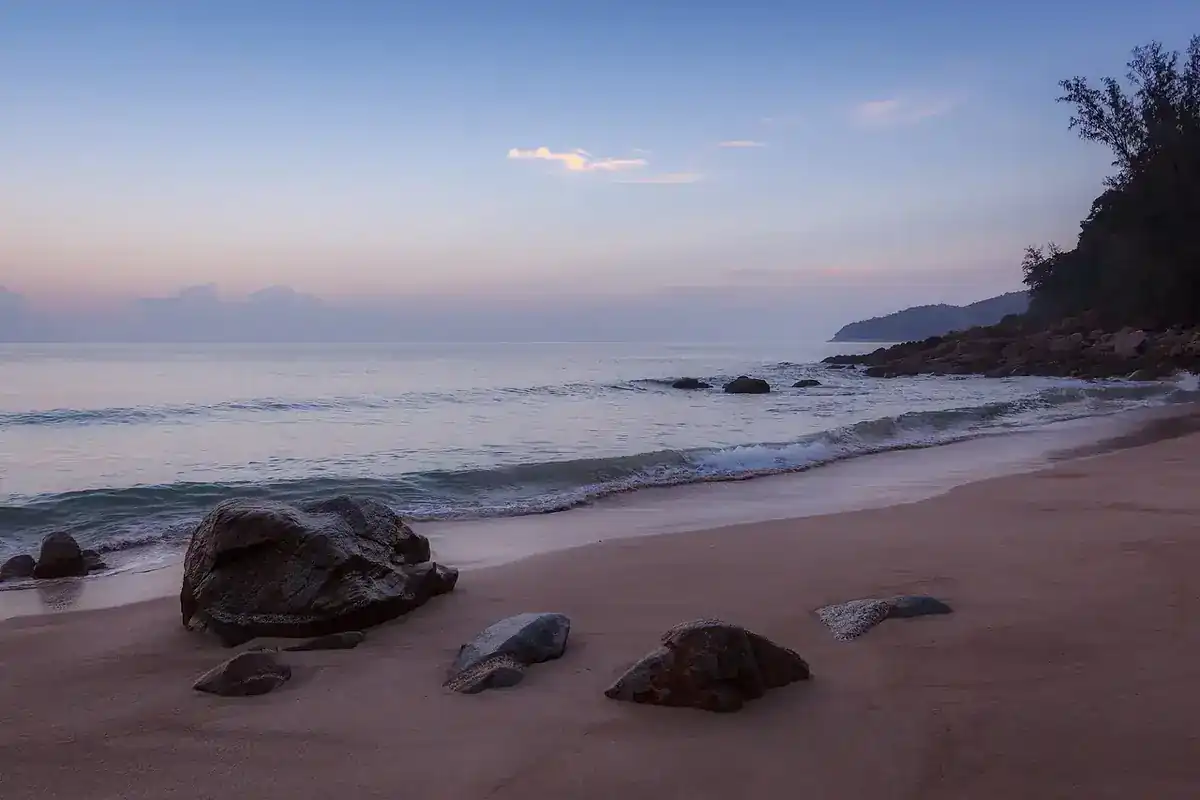
Phuket has dozens of beaches, and the right one depends on what you want from the day. Some are busy strips with sunbeds, restaurants and water sports, while others are quiet stretches of sand with a few cafes. Conditions also change by season, since the west coast is calm in the dry months and dangerous at times in the monsoon. This guide compares the main beaches, explains how to read the conditions and suggests which to pick. For where to sleep, see Where to Stay in Phuket, and for the island overview, see the Phuket hub.
How we group them (selection criteria)
Beaches below are grouped from north to south on the west coast, then the south and east. They were selected because they are commonly visited and have clear differences in atmosphere. The comments describe typical conditions, not rankings, and are not based on ratings or awards.
Quick comparison
| Beach | Atmosphere | Facilities | Swimming (dry season) | Swimming (monsoon) | Suits |
|---|---|---|---|---|---|
| Mai Khao | Long, empty, near airport | Few | Good in calm weather | Dangerous currents | Quiet walks |
| Nai Yang | Quiet, local, shaded | Cafes and restaurants | Good | Rough | Families, quiet stay |
| Nai Thon | Small, calm | Few | Good | Rough | Peace |
| Bang Tao | Long, resort-lined | Beach clubs, restaurants | Good | Rough, strong currents | Resort stays |
| Surin | Small, cafes behind | Cafes | Good but can have currents | Dangerous | Couples, cafes |
| Kamala | Local, moderate | Restaurants | Good | Rough | Relaxed stays |
| Patong | Busy, urban | Everything | Good in calm weather | Dangerous at times | Nightlife, activities |
| Karon | Long and wide | Restaurants, shops | Good | Rip currents | Families, space |
| Kata | Compact, lively | Cafes, surf school | Good | Surf; strong waves | Couples, surfers |
| Kata Noi | Smaller, calmer | Few | Good | Rough | Quieter swim |
| Nai Harn | Scenic, lagoon | Cafes | Good | Rough | Scenic, local feel |
| Ya Nui | Small, snorkel | Few | Good snorkel | Rough | Snorkelling |
| Freedom Beach | Secluded cove | Basic | Good | Rough | Quiet, adventurous |
| Panwa and east coast | Calm, mangrove or rocky | Limited | Calm | Calm | Sheltered visits |
North and mid-west beaches
Mai Khao and Nai Yang. Mai Khao is a long, very quiet stretch near the airport, partly within a national park. It is a pleasant place for a walk, but planes pass overhead, and swimming can be dangerous when waves are high. Nai Yang is more convenient, with shade from casuarina trees and a few casual restaurants. Both are good for travellers who want calm, but services are limited.
Nai Thon and Layan. Nai Thon is small and quiet. Layan has a more resort-oriented feel with a stretch of sand that is quiet compared with Patong. Both are good for a peaceful day.
Bang Tao. One of the island's longest beaches, with resorts, beach clubs and restaurants. Parts of the beach are very calm in the dry season. In the green season, swim only where there are lifeguards and flags allow.
Surin. A small beach with a cafe strip behind it. It is attractive, but currents can be strong, especially in the monsoon months.
Kamala. A longer beach with a village feel and a mix of local and visitor facilities. It is quieter than Patong.
Patong, Karon and Kata
Patong. The busiest beach on the island, with sunbeds, jet-skis, parasailing and a lively evening scene. If you want activity and convenience, it delivers. If you want quiet, look elsewhere. Water quality and crowding are the usual complaints; check recent conditions locally.
Karon. A long, wide beach with space to spread out, a good choice for families who want room. Rip currents occur during the monsoon months, so respect the flags.
Kata and Kata Noi. Kata is compact and lively, with a young crowd and surf school during the monsoon. Kata Noi, over the headland, is smaller and usually calmer. In the green season, Kata is known for waves and is not a place to swim when flags are red.
South and east
Nai Harn. A scenic bay with a lagoon behind it and a mix of locals and visitors. It is one of the more attractive beaches in the south but can have rough water in the wet season.
Ya Nui. A small cove near the southern cape, with decent snorkelling in calm conditions.
Freedom Beach and the Patong hills. Freedom Beach is a secluded cove reached by a steep path or by boat. It is quiet and scenic, but facilities are minimal, so bring water and be careful on the path.
Panwa Cape and east coast. The east coast faces sheltered water and is more about marinas, views and seafood than swimming. It is a useful alternative when the west coast is rough.
Reading the conditions
Red flags mean do not swim. Rip currents are a leading cause of drowning on Phuket's west coast, mostly between May and October. Do not swim alone, and do not try to rescue someone without a flotation device. Call 1669 for medical emergencies or 1155 for the Tourist Police.
- Flags: red means danger, yellow means caution, and green means conditions are generally safe. Lifeguards at main beaches raise flags daily.
- Waves: big surf can appear without warning, even on sunny days in the wet season.
- Marine life: jellyfish may appear in some months. Follow lifeguard advice and consider a rash vest.
- Check the forecast with the Thai Meteorological Department and ask your hotel about local conditions.
Choosing by travel style
- Families with young children: Karon (space), Nai Yang (shade, calmer), Kata Noi (smaller).
- Couples: Surin, Kata Noi, Nai Harn and Bang Tao beach clubs.
- Nightlife and activity: Patong.
- Quiet and nature: Mai Khao, Nai Thon, Nai Yang, Freedom Beach.
- Snorkelling: Ya Nui in calm conditions, plus island tours such as the Phi Phi tour.
- Surf: Kata and Kata Noi in the monsoon months, with a lesson from a local school.
Practical tips
- Sun and heat: midday sun is intense; use sunscreen, a hat and shade.
- Beach vendors: you will meet sellers of drinks, massages and souvenirs. A polite no is usually enough.
- Sunbed charges: prices vary by beach and season; check before sitting down.
- Valuables: do not leave bags unattended on the sand.
- Respect nature: do not take shells, coral or sand, and take your rubbish with you.
Visit popular beaches in the morning, before the crowds and the midday heat, and save the afternoon for a shaded cafe or pool.
Beach days and itinerary
If you want a plan, the Phuket 3-day plan combines beach time with Old Town and an island trip. For the best months and the monsoon in detail, see Best time to visit Phuket. Nearby beach alternatives are available in Krabi and Khao Lak.
FAQ
Which is the best beach in Phuket?
There is no single best beach. Patong suits activity, Karon and Kata suit families and couples, and Nai Yang and Mai Khao suit those wanting quiet.
Which beach is best for swimming?
In the dry season, most west-coast beaches are good when flags are green. Kata Noi and Karon are often popular for swimming. In the monsoon, conditions change quickly, so follow the flags.
Are Phuket beaches safe to swim at in the rainy season?
They can be dangerous. Rip currents and strong waves are common, and drownings occur most years. Swim only where lifeguards are present and flags allow.
Which Phuket beach is quietest?
Mai Khao, Nai Thon, Nai Yang and Freedom Beach are generally quieter, although conditions vary by day.
Are there beaches for snorkelling?
Ya Nui and some island stops are popular, but conditions depend on the season. Boat tours are the more reliable way to snorkel.
Do I have to pay to use a Phuket beach?
Beaches are public. You may pay for sunbeds, umbrellas or beach club access. Check prices before you sit.
Official sources and further reading
Prices, schedules and entry rules change. Figures here are approximate as of 2026; always confirm on the official or operator page before you book. Spotted something out of date? Tell us.