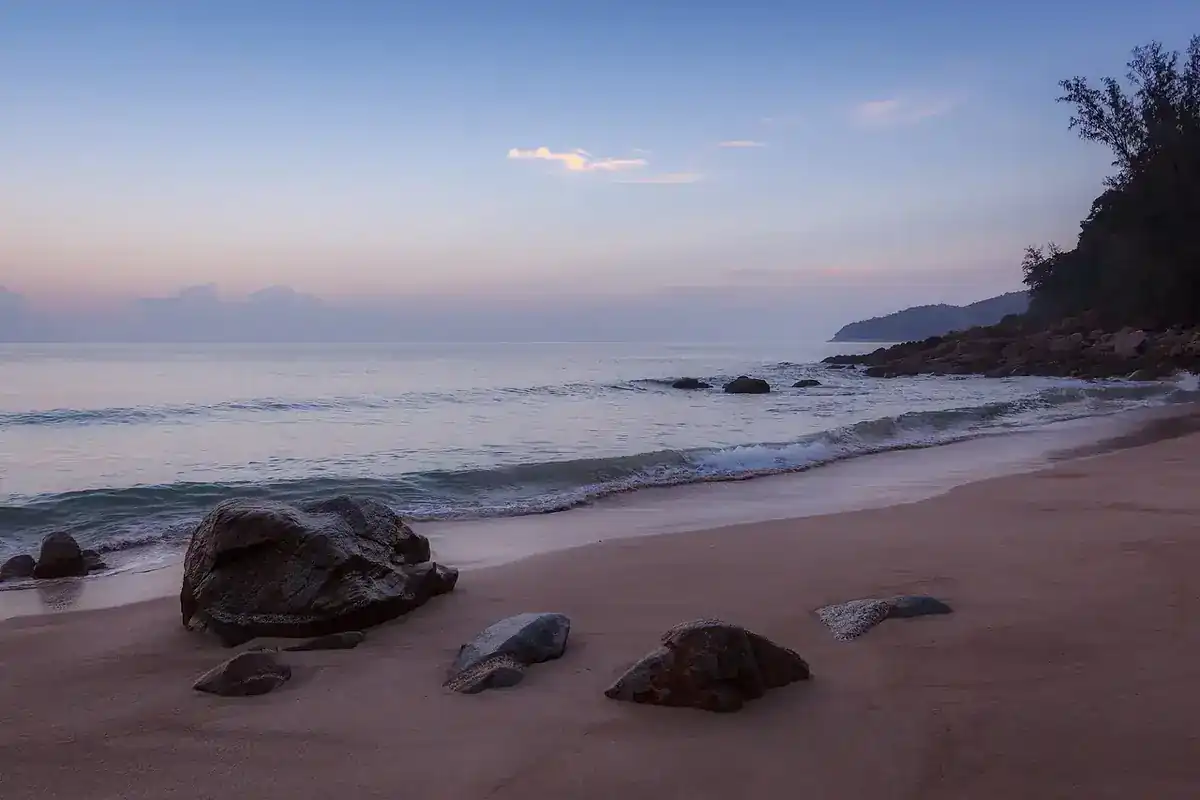
Phuket sits on the Andaman Sea and has a tropical climate with two main seasons rather than four. The best time to visit depends on what you value most: dry weather and calm seas, lower prices, or quieter beaches. This guide breaks down the year so you can choose, and explains what still works if you can only travel in the wetter months. See also the Phuket hub for a broader overview.
The two seasons
Dry season (roughly November to April). Northeast winds bring drier air. Seas on the west coast are calmer, visibility for snorkelling is generally better, and boat trips run reliably. This is also the high season for hotels and flights.
Green or wet season (roughly May to October). The southwest monsoon brings more rain, cloud and bigger waves on the west coast. Showers often come in bursts, with sunny stretches between them. Hotel rates drop and the beaches and attractions are quieter, but sea conditions can restrict swimming and boat tours.
Actual weather varies year to year. Always check the latest forecast from the Thai Meteorological Department before you finalise plans.
Month-by-month guide
The notes below describe typical patterns, not guarantees.
| Month | Typical weather | Sea and swimming | Crowds and prices |
|---|---|---|---|
| January | Dry, sunny, warm | Calm and clear | High season; high prices |
| February | Dry, hot | Calm and clear | High season |
| March | Hot, mostly dry | Calm; good visibility | Busy but easing |
| April | Hottest month; occasional storms | Calm, warm water | Songkran period is busy in the middle of the month |
| May | Rains begin; humid | Waves build on west coast | Prices drop |
| June | Frequent showers | Rougher on west coast | Quiet |
| July | Showers and cloud | Rough seas at times | Quiet; mix of travellers |
| August | Rainy with sunny breaks | Rip currents; flags | Quiet; some tours reduced |
| September | Often the wettest | Rough; cancellations more likely | Lowest demand |
| October | Wet; rains ease late in month | Improving late October | Quiet, prices low |
| November | Transition; drier by the end | Seas calming | Rates rise towards December |
| December | Dry, sunny, cooler evenings | Calm and clear | Peak season |
Choosing by priority
- Best overall for beaches, snorkelling and boat trips: late November to March.
- Fewer crowds with decent weather: November, or March to early April before the hot period peaks.
- Lowest prices: May to October, particularly June to September.
- Surfing: the monsoon months bring waves to Kata, Karon and Kata Noi, though conditions can be dangerous for swimmers.
- Diving and snorkelling: best visibility is typically in the dry season. The Similan Islands, which are a separate national park, usually open for the season in the dry months. Check the official park dates.
- Festivals: the Phuket Vegetarian Festival takes place in the ninth lunar month, usually in September or October, with processions and street food in Phuket Town. Dates change each year, so check the Tourism Authority of Thailand.
Songkran, the Thai New Year water festival, is in mid-April. Expect water fights, closures of some businesses and higher demand for transport.
Visiting in the green season
You can still enjoy Phuket in the rainy months if you plan for it.
- Pick a flexible hotel with a good pool and indoor space. Beach days are not guaranteed.
- Choose east-coast or sheltered activities. Phang Nga Bay is more sheltered than the open west coast, and some tours run in lower-wave conditions. See the Phang Nga Bay tour guide.
- Book island tours with a flexible cancellation policy. Operators cancel for weather. See the Phi Phi tour comparison.
- Respect the flags. Red flags mean do not swim. Rip currents are a leading cause of drowning on the west coast in the monsoon months.
- Have indoor options ready: Old Town, museums, cooking classes, spas and malls.
- Take insurance that covers weather-related cancellations and medical care.
Rip currents and big waves are serious hazards at Patong, Kata, Karon and other west-coast beaches from May to October. Swim only where lifeguards are on duty and flags permit. In an emergency, call 1669 for medical help or 1155 for the Tourist Police.
What the weather feels like
Phuket is hot all year, typically around 30 degrees Celsius in the day, with high humidity. March and April are usually the hottest. Evenings are warm throughout the year. Rain is more frequent and heavier from May to October, and storms can bring strong winds. Sun protection is needed in every season, including cloudy days.
What to pack by season
- Dry season: light clothing, sun protection, swimwear, a light layer for air-conditioned spaces and a hat.
- Green season: a light rain jacket or umbrella, quick-dry clothes, sandals that grip, a waterproof phone bag and mosquito repellent.
- All year: insect repellent, reef-safe sunscreen and a reusable water bottle.
Booking tips by season
| Season | Hotels | Tours | Flights |
|---|---|---|---|
| Dec-Jan | Book early; limited availability | Popular tours sell out | Prices high; book early |
| Feb-Apr | Good availability, rising or steady rates | Reliable | Moderate |
| May-Oct | Wide availability, discounts common | Some cancelled for weather | Often cheaper |
| Nov | Good value early in the month | Reliable late in the month | Prices increase towards December |
Prices are directional, not exact. Check the current price on the operator's or property's own page.
Where to go in each season
If the west coast is rough, plan around it. The east coast and Old Town are less affected, and nearby destinations may have different conditions, such as the Gulf of Thailand, which has a different rainfall pattern. For an overview across the country, see Thailand. To pick a base that suits the season, see Where to Stay in Phuket, and for a ready-made itinerary, see the Phuket 3-day plan.
FAQ
What is the best month to visit Phuket?
For calm seas and dry weather, January and February are among the most reliable, but they are also busy. Late November and March can offer a good balance of weather and crowds.
Is Phuket worth visiting in the rainy season?
Yes, if you are flexible and want lower prices. Expect showers, rough seas on the west coast and some cancelled boat trips. Many days still have good weather.
When is the cheapest time to go?
Prices are generally lowest from May to October, with September often the least expensive.
Which months are the wettest?
Typically September and October, though this varies each year. Check the Thai Meteorological Department for forecasts.
Can I swim in the monsoon months?
Sometimes, but conditions can be dangerous. Follow the lifeguards, flags and local advice, and avoid swimming under red flags.
When is the best time for snorkelling and diving?
The dry season, roughly November to April, generally offers calmer seas and better visibility. Check the current conditions with your operator.
Official sources and further reading
Prices, schedules and entry rules change. Figures here are approximate as of 2026; always confirm on the official or operator page before you book. Spotted something out of date? Tell us.